Local detail
When It Stops Being a DIY Job
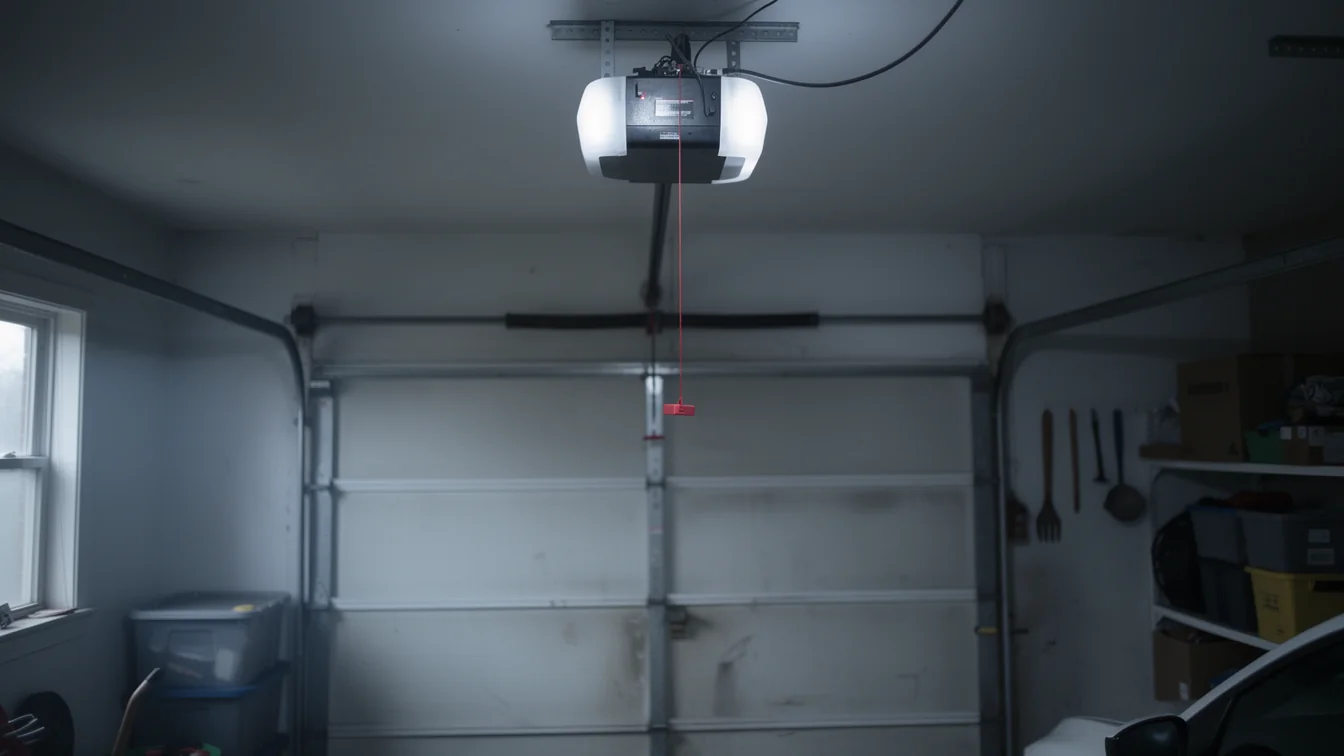
A power cut by itself isn't a repair call. Every opener, no matter how old, has a manual release cord hanging from the trolley - pull it and the door disconnects from the opener so you can lift it by hand. That's the fix for most outages, and it costs nothing.
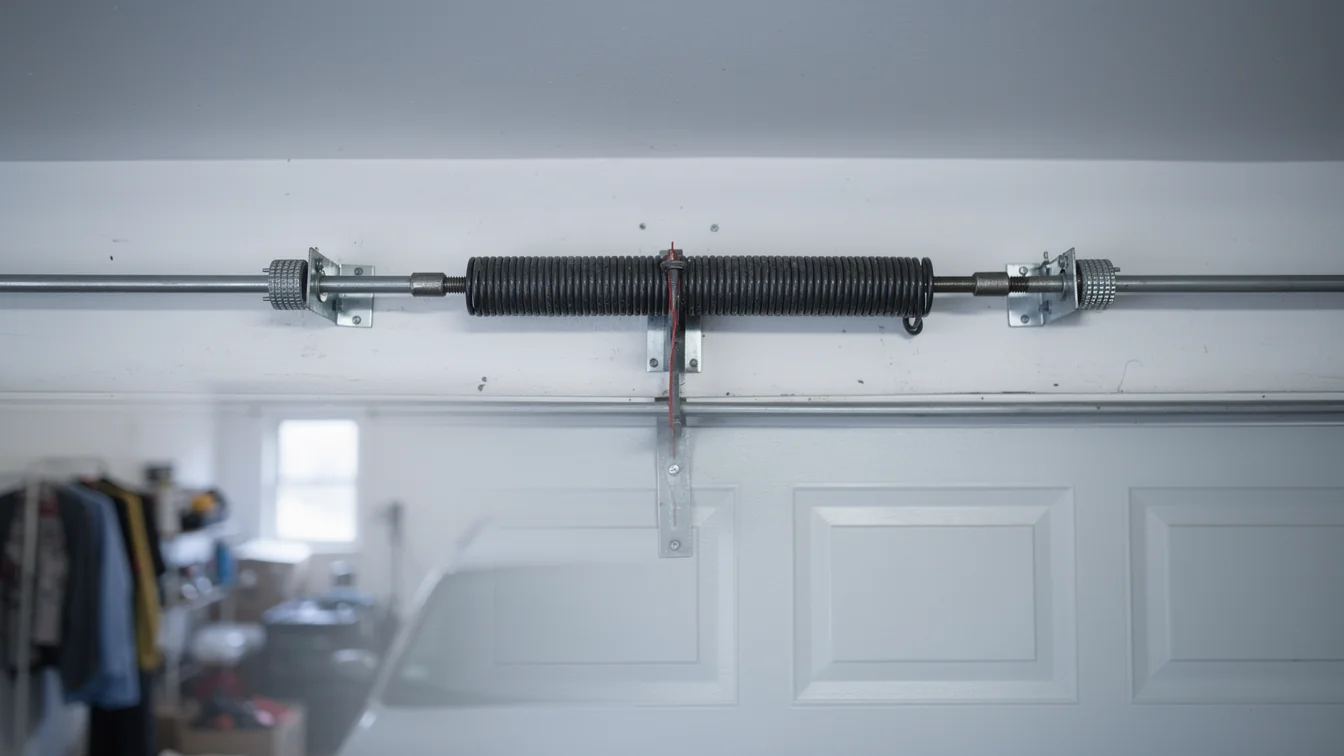
Where it stops being a DIY job is when the door won't lift by hand either, or lifts and then drops. That's not an opener problem anymore - that's a spring that's already weak and was only being masked by the motor doing the lifting work. Pulling the release cord on a door with a failing spring can let a heavy panel come down fast, and on the older one-piece and sectional steel doors common across this area, that's enough weight to hurt someone. If the door is hard to lift by hand with the opener disconnected, stop and call. We don't install home generators or whole-house backup power - that's an electrician's job, not ours - but we can tell you in five minutes whether what you're dealing with is the opener or the spring.
The area
What Is Going On
Housing in the areas we run calls in was built between 1938 and 2013, with a median year of 1986, and most of the stock across the six communities we cover dates to the 1980s and 90s. That matters here specifically: openers installed on houses from that era are overwhelmingly chain-drive units wired straight into house power, with no battery backup built in. Battery backup wasn't standard equipment when these systems went in, and a lot of them have never been upgraded since.
So when the power cuts, the opener doesn't fail - it just has nothing to run on. The motor, the circuit board, the safety sensors all go dark at once. On a newer install with a battery backup module, the door still opens and closes through the outage. On the chain-drive unit that's been running quietly in a lot of these garages since the Reagan administration, it's manual release or nothing until the power's back.
What we find
What to Look At First
Before you call, check three things. First, the breaker - a tripped breaker or a dead GFCI outlet the opener is plugged into looks identical to a real power cut from inside the garage, and it's a two-minute fix. Second, the manual release cord - confirm the door lifts and holds on its own with the opener disconnected; if it doesn't, that's a spring issue, not an opener issue. Third, if you do have a battery backup unit on the opener, check whether it's actually charging - these backup batteries have a service life and a lot of them are dead by the time you need them, which defeats the purpose of having one.
Given the median household income in this service area runs a bit over $70,000, a battery backup opener upgrade is a reasonable thing to weigh against the cost of being locked out during the next outage - but it's worth deciding that before the power's out, not during.
How we work
How Local Conditions Play In
This area sits in a cold-moderate climate band, which means winter storms bring ice and wind that knock out power at the same time cold is stiffening everything mechanical in the garage. Torsion springs lose some flexibility in the cold, steel tracks contract slightly, and old chain-drive openers that were already working harder than they should have been now have to fight stiffer hardware with no backup power to do it.
That combination - 1980s and 90s openers with no battery backup, paired with cold-weather power cuts - is the specific failure pattern we see repeated across this area. It's not that the opener is broken in some new way; it's that the one weakness it always had (no backup) lines up with the one time of year (ice storms) when you most need the door to work. If your opener is original to a house from that era and you've had more than one outage leave you stuck, that's the signal to replace it rather than keep working around it.
Talk to a local pro
Garage door trouble in Columbia?
Same-day service with honest, upfront quotes.