Local detail
When It Stops Being a DIY Job
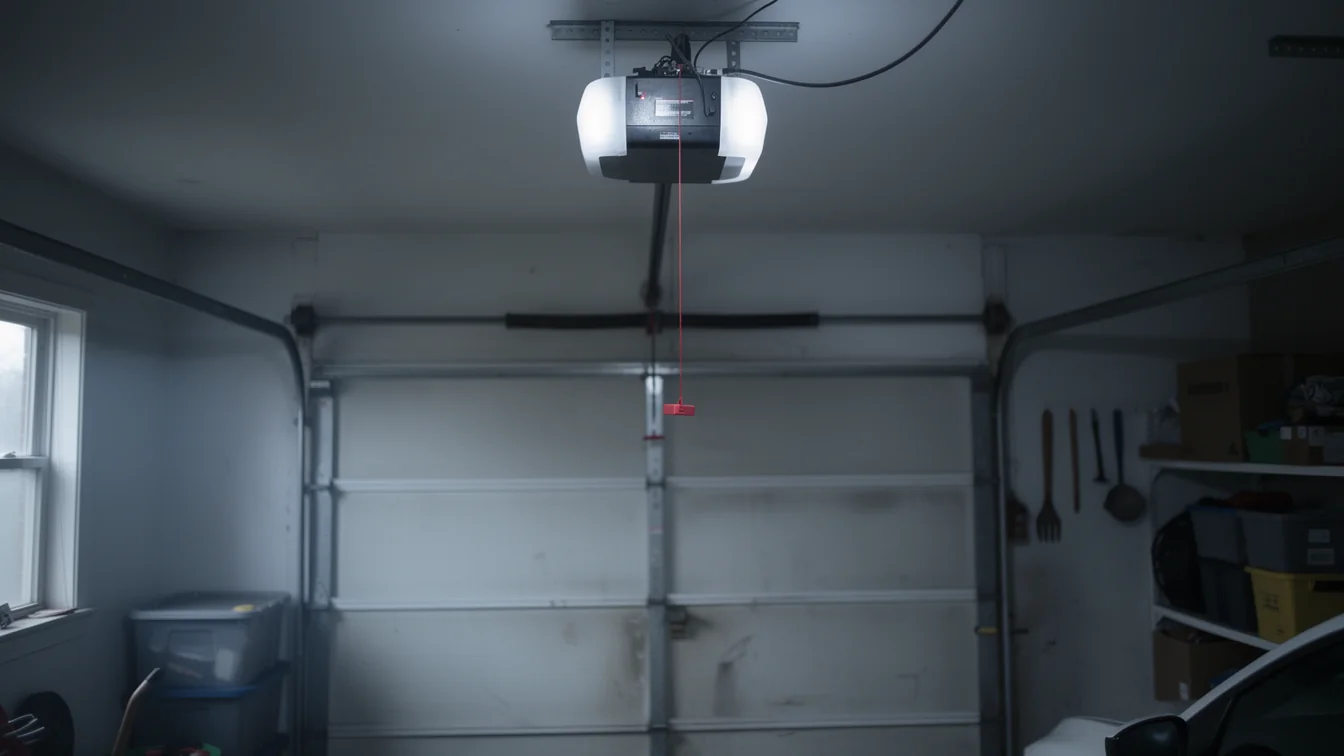
Columbia's housing stock runs from 1938 up through 2013, with the median build year sitting at 1986. That spread matters more than people think. A door that's original to a house built in the late 1930s is a different animal than one installed on a house from the 1990s. If your door is original hardware on a pre-1960s house, you're dealing with parts nobody stocks anymore - odd-width tracks, non-standard spring sizes, hinges that don't match anything on the shelf at a supply house. At that point, pulling a panel to "just see what's wrong" can turn into a half-day job with the door off its track and no clear path back together. If your opener clicks, reverses, or won't close all the way, that's a safety sensor or limit switch issue, and those are fine to check yourself. But once you're pulling a spring under tension or realigning a bent track, call someone. A torsion spring under load has put people in the ER for a lot less than a garage door.
The area
What Is Going On
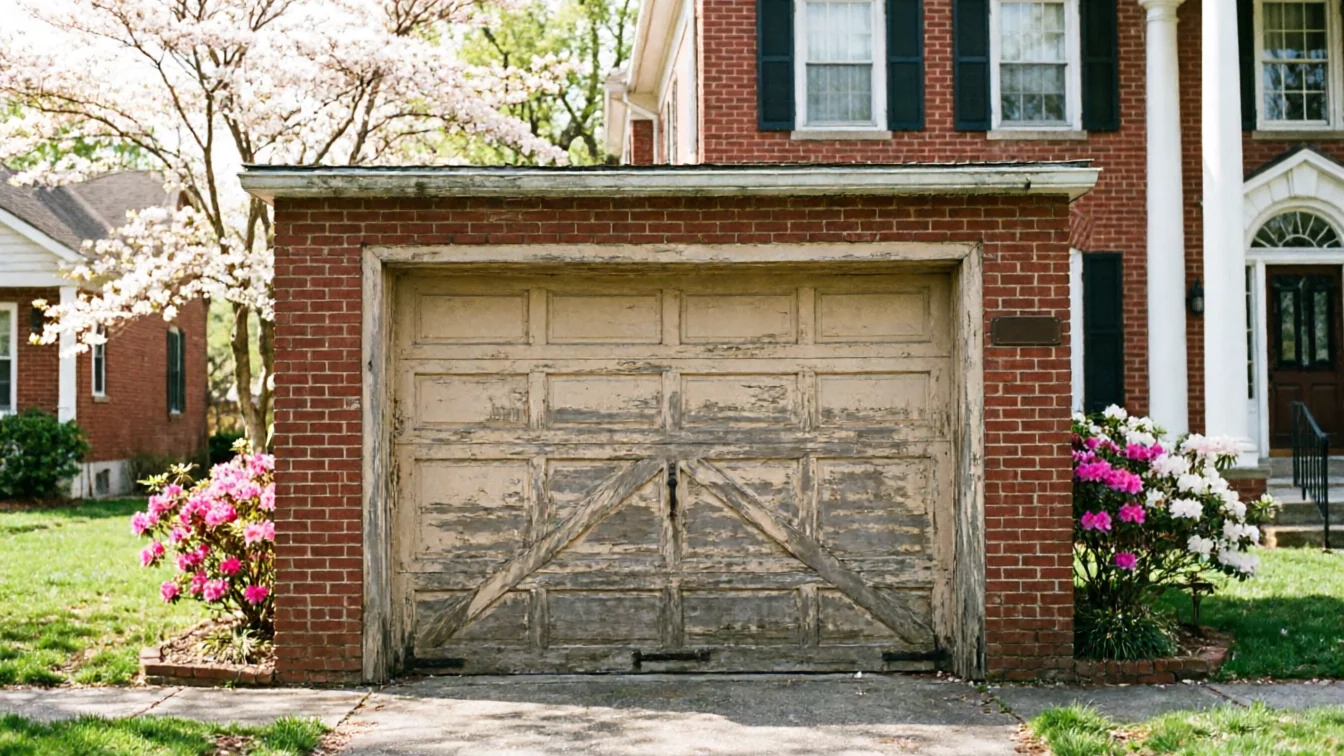
Most of the doors we get called on sit in houses built in the 1980s and 90s, which lines up with how much of Columbia's six main residential areas filled in during that stretch. These doors are old enough that original springs have usually cycled past their rated life - a torsion spring is good for somewhere around 10,000 cycles, and a door that's opened twice a day for 35 years has used that up more than once already. What you're often looking at isn't one bad part, it's a door where the spring, the rollers, and the weatherstripping have all aged out together. On the older end of the range, houses built closer to 1938-1960, you'll sometimes find doors that were swapped once already in the 80s or 90s, which is its own kind of complication - newer panel, older track, mismatched hardware from two different eras bolted to the same frame.
What we find
What to Look At First
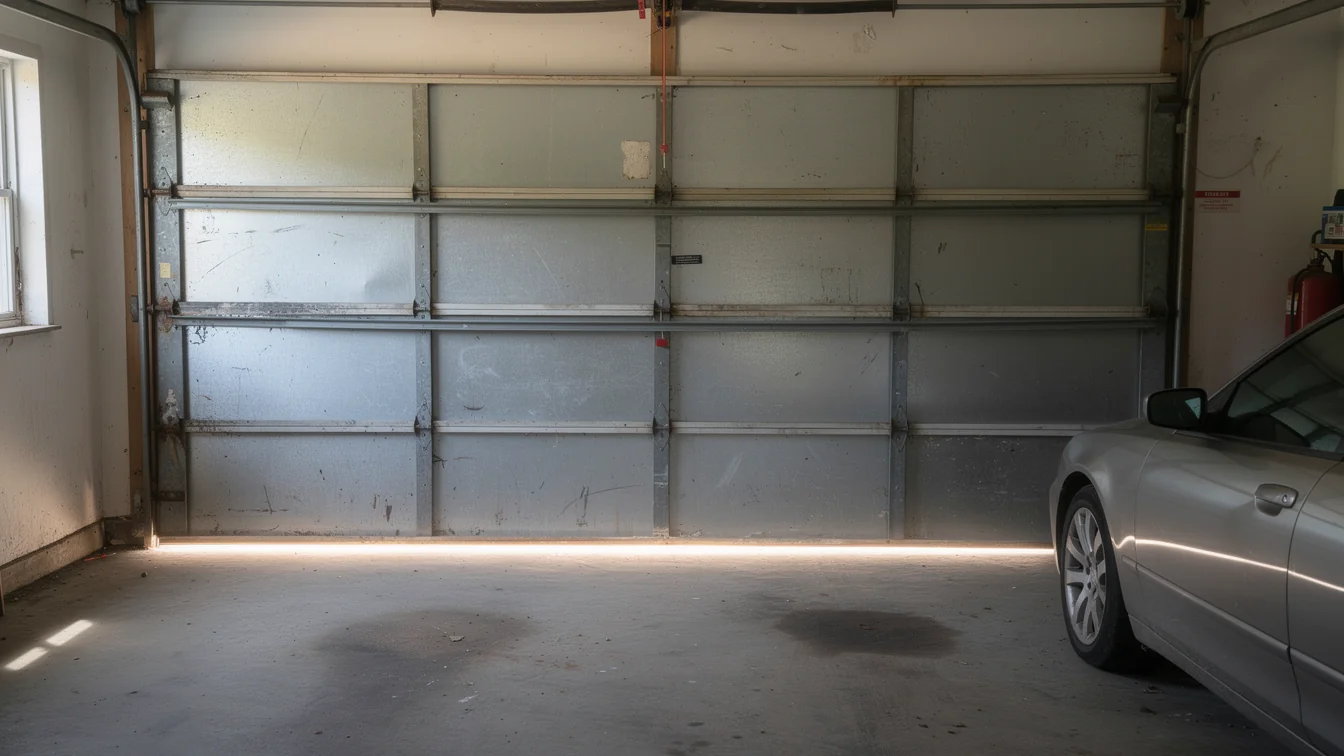
Start with the springs. If the door feels heavy to lift by hand with the opener disconnected, or if it slams down instead of lowering evenly, the spring has lost tension and that's not a lubrication problem. Next, check the rollers - on a door that's 25 to 40 years old, steel rollers without nylon bushings are usually the original ones, and they're the first thing to start grinding and binding in the track. Look at the bottom panel too. Moisture sitting at the slab line over a few decades of cold winters will rot out a wood-composite panel from the inside before you see it from outside. Last, check the weatherstrip at the bottom edge - if it's cracked or flattened, cold air is getting past it regardless of what else is working. None of this tells you whether to repair or replace on its own, but it tells you what's actually failing instead of guessing.
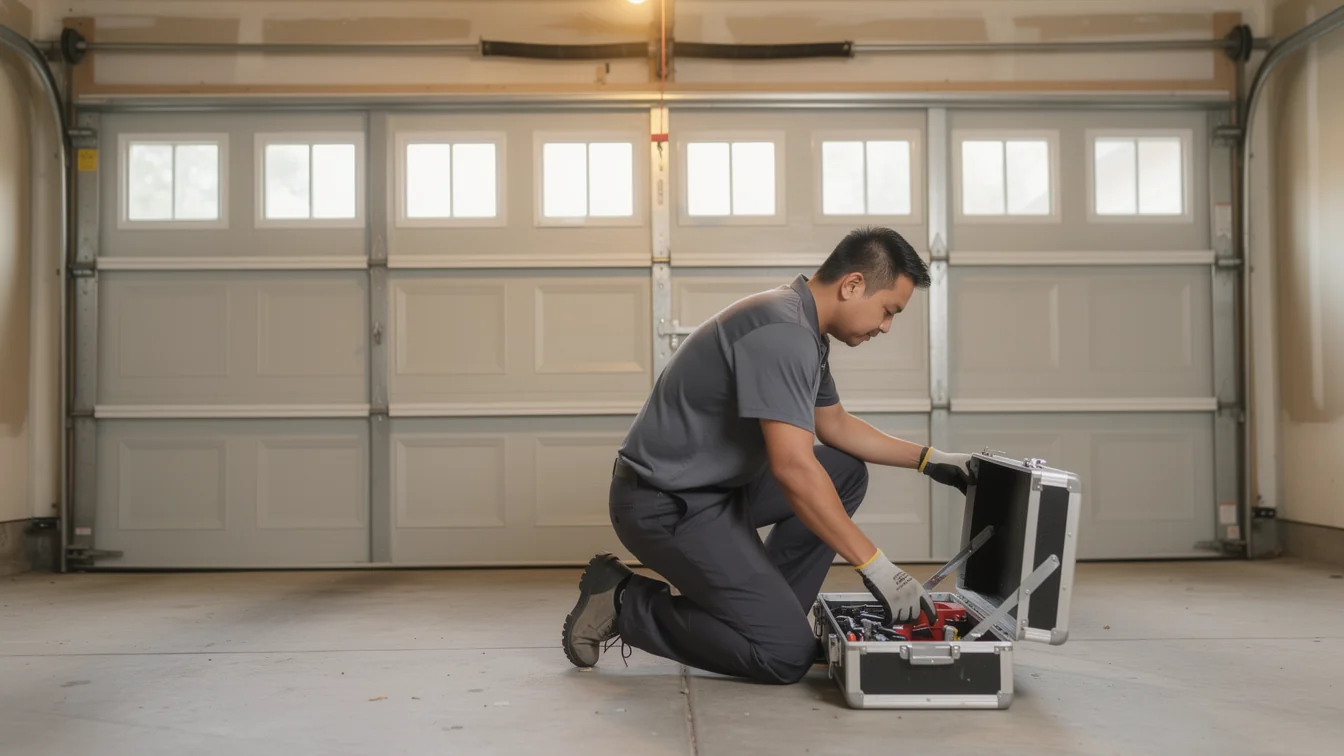
How we work
How Local Conditions Play In
Columbia sits in a cold-moderate climate band, which means winters cold enough to stiffen grease and shrink metal, but not the kind of deep-freeze extreme that cracks concrete slabs outright. What that does to a garage door: lubricant that was fine in August gets thick in January, rollers bind, and openers strain harder to pull a door that's already heavier than it should be from a worn spring. On older houses, especially the 1938-1960s builds with less insulation in the garage structure itself, that temperature swing is harder on wood panels and steel track alignment than it is on a door installed in the last ten years. If your door struggles more in winter than summer, that's not a coincidence - it's the cold finding whatever was already marginal on the door. A door that works fine nine months a year but fights you every January is telling you something specific, not just being old.
Talk to a local pro
Garage door trouble in Columbia?
Same-day service with honest, upfront quotes.