Local detail
When It Stops Being a DIY Job
A loose roller or a chirpy hinge is fair game for a Saturday morning with a wrench. A torsion spring is not, and in Columbia that's the repair we see homeowners attempt right after the door won't budge on a cold morning. The spring under tension on a double door can put several hundred pounds of pull on a winding bar, and if it lets go while you're on the ladder, it doesn't just hurt - it can break fingers or worse. That's the line: springs, cables, and anything holding the door up under tension goes to someone who does it daily. Tightening hardware, lubricating tracks, clearing a sensor eye, those are fine on your own.
The other marker is age. With housing in this area going back to 1938 and the median build year sitting at 1986, a lot of the doors we're called on are original or close to it - meaning the springs have been cycling for three, four decades. Metal fatigue doesn't announce itself. It just lets go, usually on the coldest morning of the year, which is when the steel is least forgiving. If your door is from that era and you haven't had the spring looked at, that's the one thing worth a call before you touch it yourself.
The area
What Is Going On
Most of what we get called out for falls into two buckets: something snapped, or something's dragging. A snapped torsion spring makes the door feel like dead weight - the opener strains, the door won't lift past a foot or two, or it slams down on its own. A cable that's frayed or jumped its drum shows up as a door that hangs crooked on one side. Both are common on houses built through the 1980s and 90s, which describes most of the stock in the six named areas this company works - original hardware that was fine for twenty years and is now past its rated cycle count.
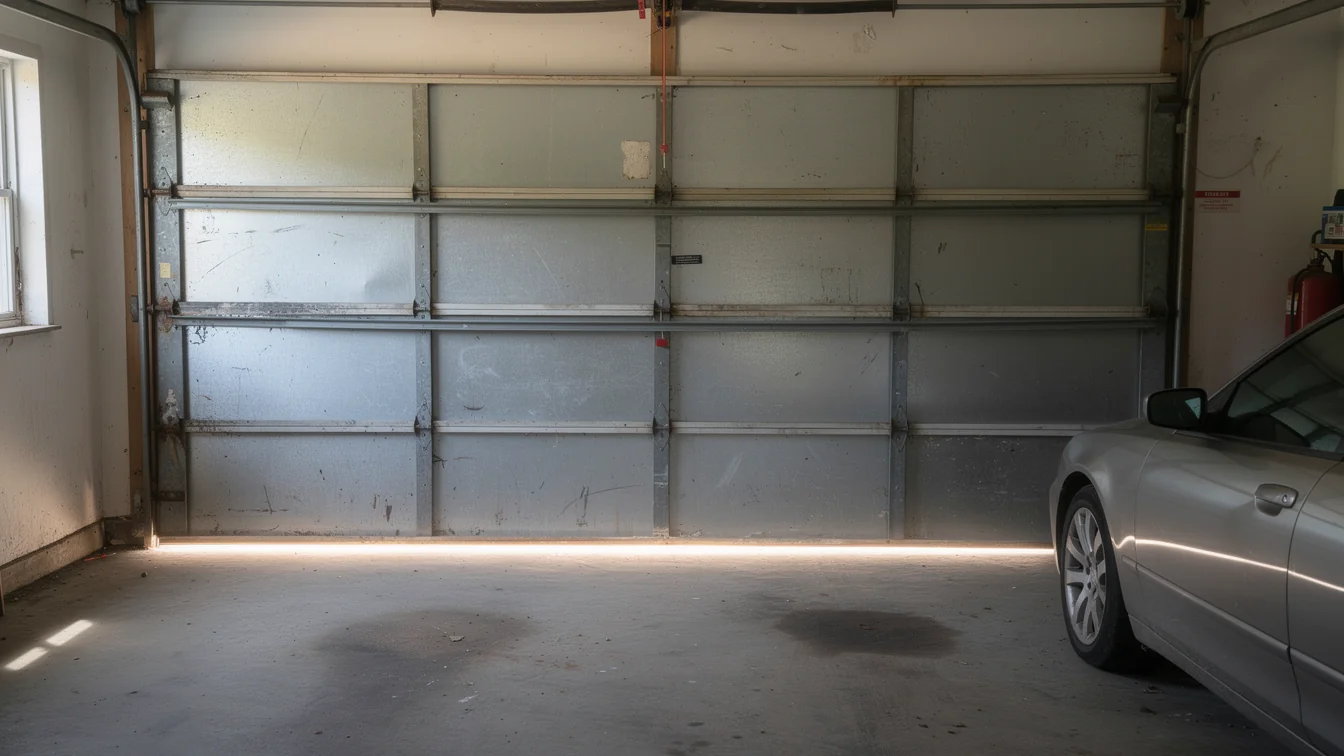
Dragging is a different animal. Tracks pull out of alignment as a house settles, rollers wear flat on one side, and on older doors the steel panels themselves can sag at the bottom where moisture's gotten in over the decades. None of this is dramatic until the day it is - a door that's been dragging for months can suddenly jump the track entirely. If your door's been making a new noise for more than a week, that's worth a look before it becomes a bigger job.
What we find
What to Look At First
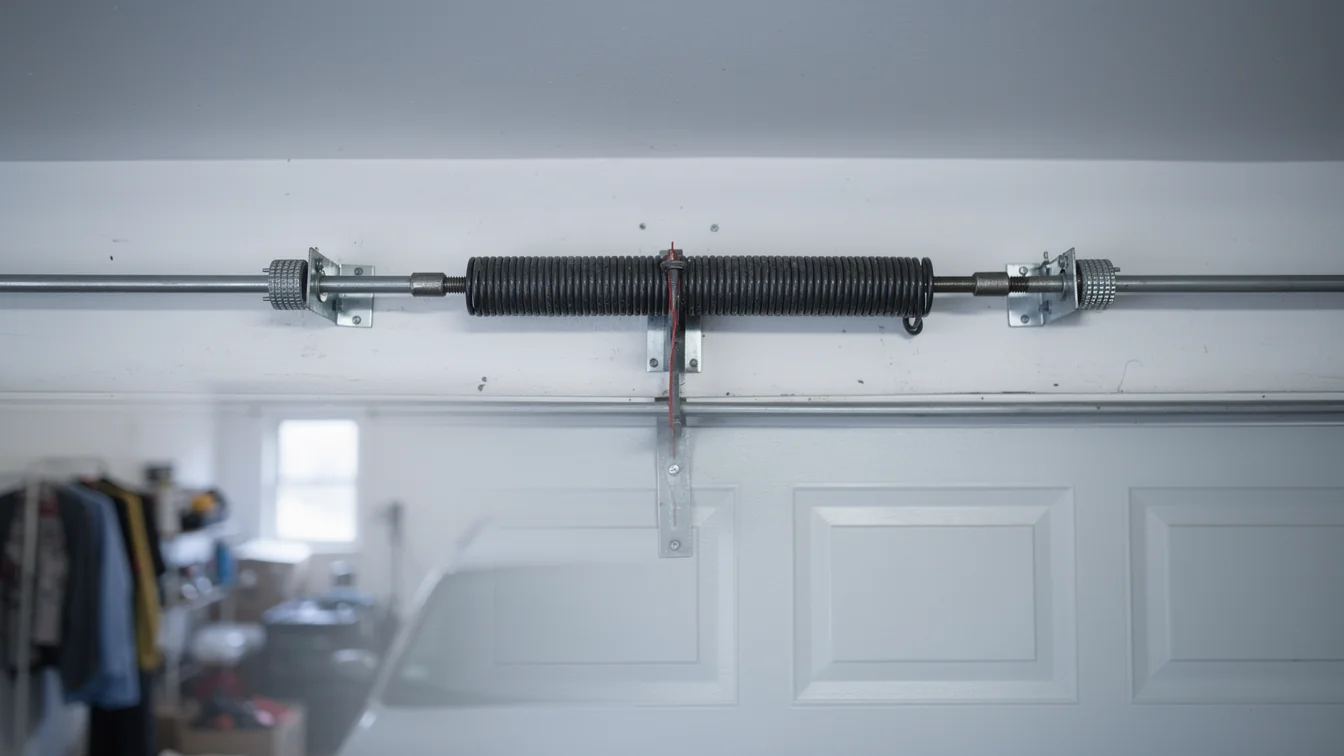
Before calling anyone, look at three things. First, the springs - two thick coiled rods above the door on a torsion setup, one tube running the width of the opening. A gap in the coil, or one side sitting visibly looser than the other, means it's close to going or already has. Second, the cables running down each side to the bottom corners of the door - fraying strands or visible rust mean replace, not patch. Third, the bottom rollers - if they're worn into a cone shape instead of a cylinder, the door's been riding rough for a while.
We won't pretend every noise means a dead spring. Sometimes it's just a dry hinge, and a can of the right lubricant fixes it for a year. We'd rather tell you that over the phone than drive out and charge for a five-minute fix. But if the door's from the 1980s-90s stock that makes up most of this area and you're seeing any of the three signs above, don't wait on it - a spring that's partly gone tends to finish the job without warning.
How we work
How Local Conditions Play In
Columbia sits in a cold-moderate climate band, and that matters more for garage doors than people expect. Steel contracts in cold air, and a torsion spring that's already fatigued from twenty-plus years of cycling loses what little give it had left right when the temperature drops. We see the jump in calls every year once the mornings turn cold - it's not coincidence, it's metal doing what metal does.
The same pattern holds whether you're in town or out toward Mount Pleasant, Thompson's Station, Lynnville, Lewisburg, Chapel Hill, or Summertown - all within 10 to 20 miles and built in the same stretch of decades. Houses out that way carry the same original hardware, the same spring age, and the same cold-weather failure pattern. One limitation worth saying plainly: if a spring's original to a house built in the 80s, we're not going to recommend patching it - at that age, fixing one side just means the other side goes next winter, and replacing both at once is the honest call even though it costs more up front.
Talk to a local pro
Garage door trouble in Columbia?
Same-day service with honest, upfront quotes.