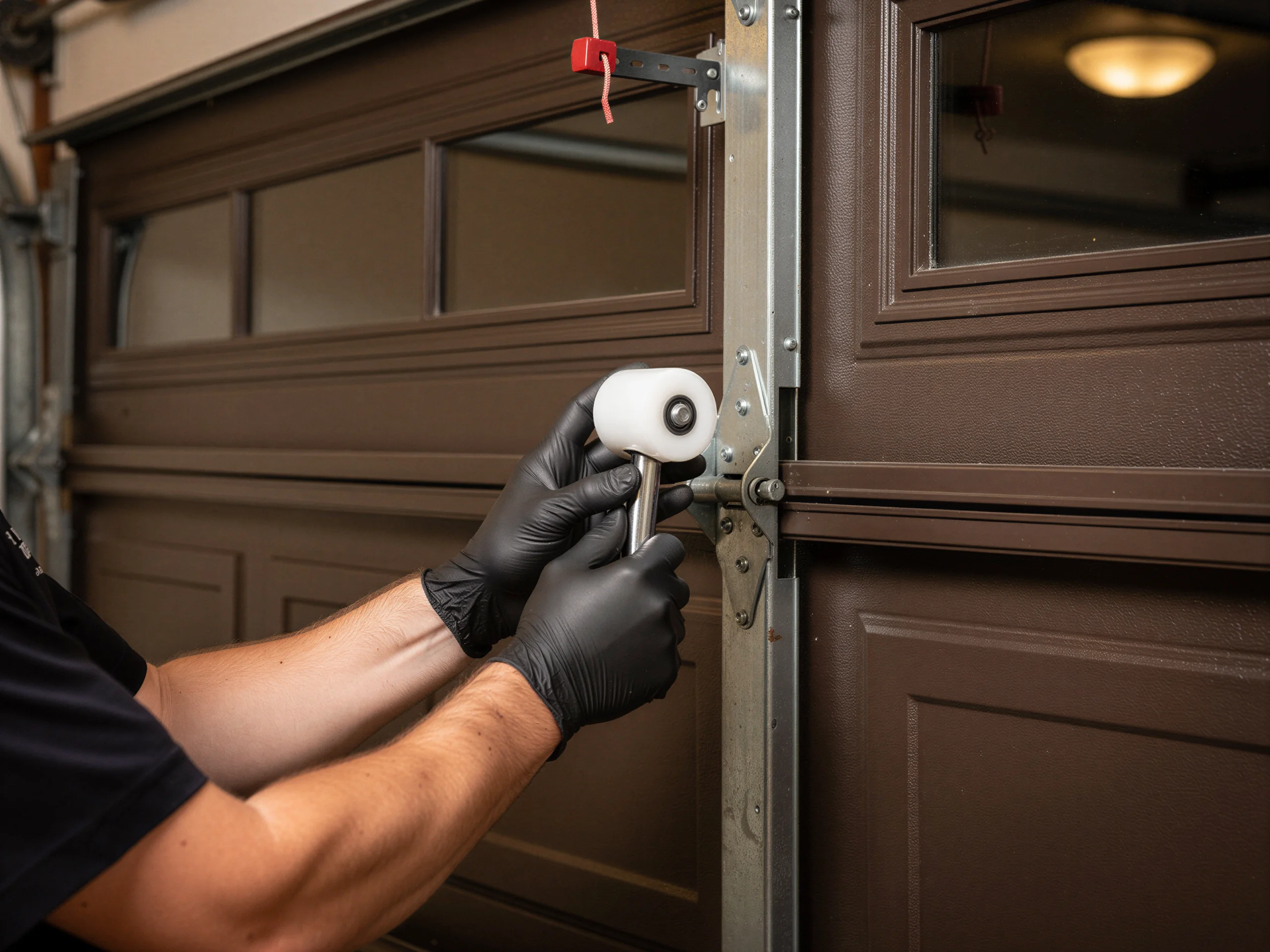
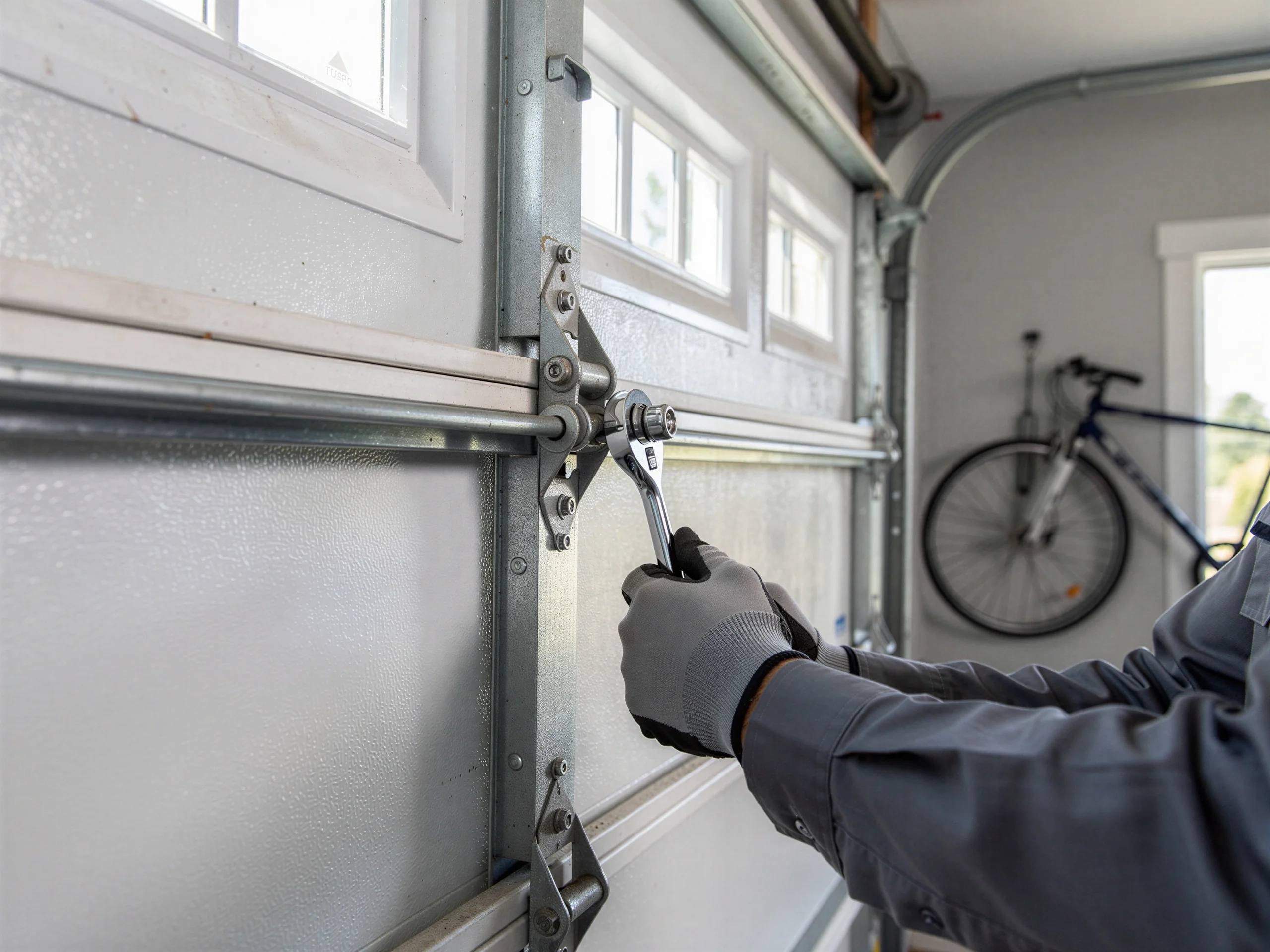
Housing across this service area runs from 1938 up through 2013, with the median sitting around 1986, and most of the stock concentrated in that 1980s-90s run across the area's named neighborhoods. That era is exactly when steel rollers on stamped galvanized track became standard builder-grade equipment - cheap to install, fine for the first decade, and prone to wear grooves once the bearings start going.
The cold-moderate climate here is the other half of it. Grease in an old roller stiffens when temperatures drop, and a stiff roller doesn't roll - it drags, chips the track edge, and eventually the nylon sleeve cracks or the steel wheel flats out. Houses built on that 1980s track gauge also tend to have tracks that shift slightly with frost heave over the years, so a roller that was fine for fifteen years starts binding the moment the track geometry changes by even a little.
Newer builds in the area sometimes came with nylon rollers from the start, which age more gracefully, but a lot of the original-equipment steel rollers from the 1980s and 90s are still out there doing a job they were never built to do for this long.