Local detail
When It Stops Being a DIY Job
Most of what goes wrong with a garage door in Columbia falls into two piles: things a homeowner can look at safely, and things that will put you in the ER if you mess with them. Torsion springs are the second pile, full stop. A broken spring on a double door built anywhere from the 1980s through the early 2000s - which covers a lot of the housing stock here - is under enough tension to break fingers or worse if you try to wind it yourself.
If the door won't open, won't stay open, or slams down fast when you pull the release, that's spring tension gone wrong. Leave it. If a panel is dented, a roller is squealing, or the weatherstrip is cracked, you're in safer territory and can poke around before calling anyone.
One honest limit: if your springs are original to a house built in the 1980s or earlier, we're not going to patch them. Springs that old get replaced as a pair, not spot-fixed, because the other one is close behind.
The area
What Is Going On
A service call starts by figuring out which system failed, not just which symptom showed up. With housing in this area spanning 1938 to 2013 and a median build year around 1986, we see a real mix: original hardware on the older side-mounted torsion setups, and newer extension-spring or torsion-spring combos on anything built since the 90s.
The diagnostic steps are the same regardless of age - check spring wind and cable condition, check track alignment, check the opener's force and travel settings - but what we find differs by decade. A house from the late 1980s is more likely to have an opener that's simply worn out from age than one with a wiring fault. A house built in the 2000s is more likely to have a sensor or logic board issue than a mechanical one.
We tell you what's actually failing before we quote anything, not just 'the door needs work.'
What we find
What to Look At First
Before you call, look at three things. First, the springs - are they stretched, gapped, or visibly broken. Second, the cables - fraying near the bottom bracket is a warning sign, not a wait-and-see sign. Third, the opener's response: does it strain, reverse unexpectedly, or make a grinding noise partway through the cycle.
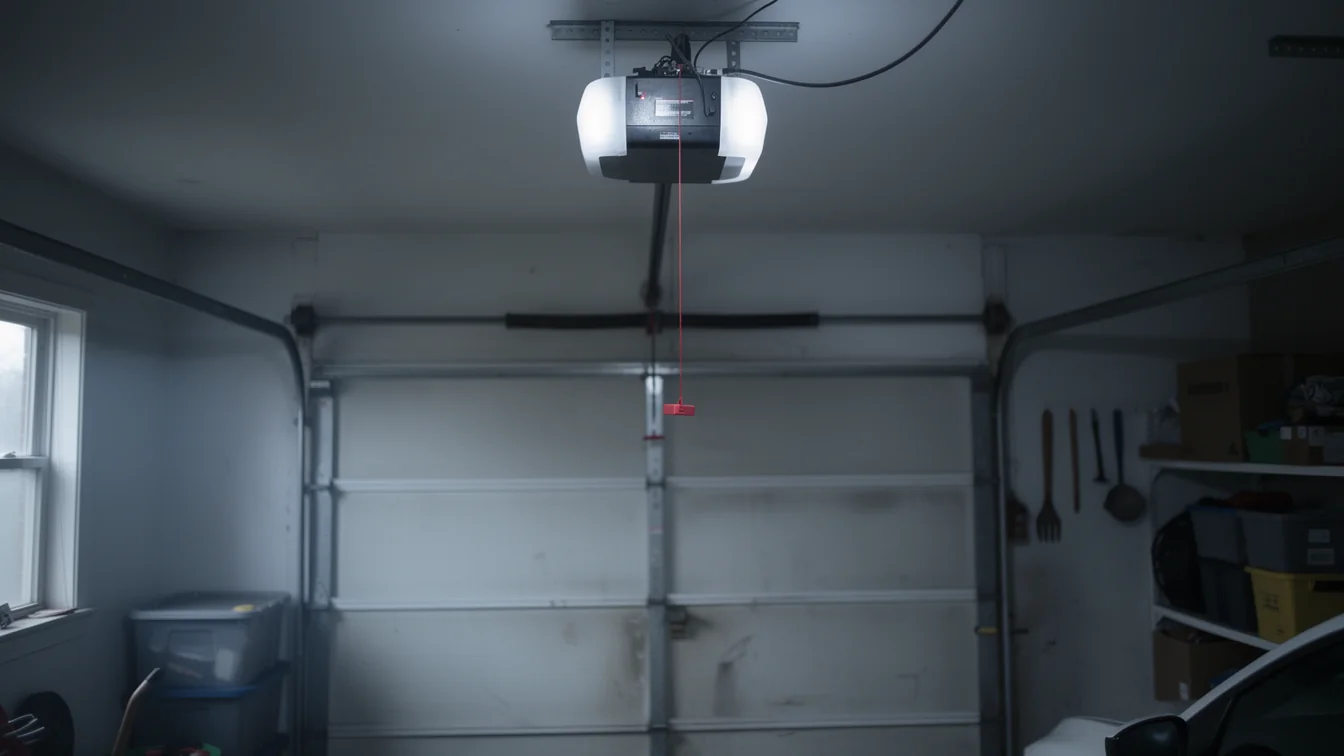
Homes in the 1980s-90s stock that makes up most of this area often still run openers original to the house, especially if no one's replaced them. A 30-plus-year-old chain-drive opener straining to lift a door is usually a motor nearing the end, not a settings problem, and no amount of adjusting the force dial fixes a worn gear.
We won't tell you to replace an opener that's working fine just because of its age. If it lifts smoothly, reverses correctly on contact, and isn't making new noises, it can keep running.
How we work
How Local Conditions Play In
Columbia sits in a cold-moderate climate band, which matters more for garage doors than people expect. Steel contracts in winter cold, and that changes spring tension slightly and tightens tolerances on track alignment. A door that ran fine in October can start binding or reversing early once temperatures drop, without anything actually breaking.
This shows up most on older torsion setups, where decades of minor rust or dried lubrication combine with cold-tightened steel to make the door noticeably harder to lift by hand. It also stresses opener motors that are already near the end of their service life, since cold lubricant inside the gearbox adds resistance right when the motor has the least to give.
We check spring tension and lubrication as part of any cold-season call, not as an upsell - it's the difference between a five-minute adjustment and an opener replacement six weeks later.
Talk to a local pro
Garage door trouble in Columbia?
Same-day service with honest, upfront quotes.